
Choosing a printer for your business is not a small decision. The right device can improve speed, reduce waste, support growth, and protect margins. The wrong one can create bottlenecks, raise service costs, and frustrate your team. For many companies, the real question is whether they need industrial printers built for nonstop production or a commercial printer designed for professional, high-quality business output. The answer depends on volume, materials, workflow, and total cost of ownership.
Modern business printing has changed fast. Buyers now look beyond print speed alone and compare security, automation, cloud integration, maintenance demands, and energy efficiency when evaluating new systems. Recent industry buying guidance notes that businesses increasingly prioritize connected workflows, predictive maintenance, and sustainability when selecting business print equipment. Current leading considerations include secure cloud-connected printing and lower energy use, while many organizations list reliability, media flexibility, and predictable service costs as top priorities for business buyers.
What Are Industrial Printers?
Industrial printers are heavy-duty systems designed for continuous, high-volume work in demanding environments. They are common in manufacturing, packaging, warehousing, textiles, labeling, and signage. These machines are built for throughput, durability, and reliable output across long shifts. Industrial printers are often chosen for packaging, labels, rigid materials, textiles, and large-format applications, where speed and material flexibility matter as much as image quality. Industrial production printers are integral equipment engineered for sustained output, predictable cost-per-print, and workflow reliability rather than occasional office use.
If your business prints thousands of labels, package codes, banners, or specialty materials every day, industrial printers may be the right fit. Their strengths usually include higher duty cycles, better uptime, support for more substrates, and better integration with production lines. They also tend to be built with tougher components and service access designed for constant use. That matters because downtime can be one of the highest hidden costs in print operations, especially when a line stops or a shipment is delayed. In many print environments, maintenance and lost production time can have a greater impact on total cost than the initial hardware price.
What Is a Commercial Printer?
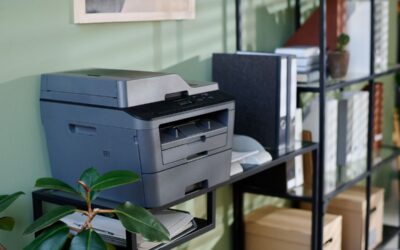
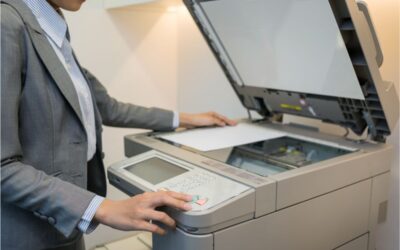
A commercial printer usually refers to a business-grade system that produces professional documents, marketing materials, presentations, brochures, booklets, or short-run branded pieces. In many workplaces, a commercial printer also includes multifunction devices that print, scan, and copy while supporting medium to high monthly volumes. These systems are ideal for businesses that need strong output quality and good reliability but do not operate a full manufacturing print environment. In general, commercial printers are more flexible for paper-based business applications and often balance quality, speed, and customization for brochures, business cards, labels, posters, and similar materials.
For many offices, agencies, schools, and growing teams, a commercial printer is the best printer for your business because it handles everyday business needs without the cost or complexity of industrial equipment. It can support faster turnaround for sales materials, internal documents, direct mail pieces, and customer-facing collateral. If your business values professional color, clean text, scanning, finishing options, and cost control for standard media, a commercial printer may deliver the best balance of capability and budget.
How to Choose the Right Printer for Your Business
Start with print volume. If your team prints occasional reports, proposals, invoices, and marketing pieces, a commercial printer is often enough. If you run long jobs every day, process labels around the clock, or print on specialized materials, industrial printers are more likely to handle the load. Duty cycle is one of the clearest dividing lines between these categories. Production-focused systems are designed for sustained output, while office-oriented systems are built for lighter and more variable demand.
Next, think about what you print. A printer for your business should match your real media needs, not just your wish list. Paper documents, proposals, and branded collateral usually point to a commercial printer. Packaging films, rigid boards, specialty labels, textiles, and signage are often used by industrial printers. Media versatility matters because the wrong machine can lead to manual workarounds, quality issues, or waste. Application type, substrate support, and growth plans should guide purchasing decisions more than the upfront price alone.
Then review the total cost of ownership, not just the purchase price. A lower-cost device can become expensive if it burns through consumables, needs frequent service, or fails during peak periods. TCO includes hardware, ink or toner, maintenance, spare parts, electricity, operator time, administration, and lost productivity during downtime. It is important to evaluate equipment cost, cost per print, and administrative overhead together, because consumables and replacement parts can exceed the original hardware cost over time.
Finally, consider workflow and support. Businesses now expect printers to connect to cloud platforms, support secure release, and integrate with existing digital systems. Service response also matters. A powerful device is only valuable if it stays available when your team needs it. Look for systems that offer strong vendor support, straightforward maintenance, and software that fits how your team works today.
Common Mistakes Businesses Make When Buying Printers
One common mistake is buying based solely on the sticker price. Another is choosing a system that is either too small for future growth or too large for current needs. Some teams also underestimate service costs, ignore workflow integration, or select a device based on brand rather than use case. The better approach is to map monthly volume, document types, media, uptime requirements, and internal support capacity before making a decision. Whether you are comparing industrial printers or a commercial printer, the best choice is the one that supports business goals without adding avoidable complexity.
Frequently Asked Questions
What is the main difference between industrial printers and a commercial printer?
Industrial printers are designed for continuous, high-volume production-line work and for specialty materials. A commercial printer is usually better for professional office output, marketing pieces, and standard business documents.
How do you know which printer is right for your business?
Start with monthly print volume, media type, quality expectations, and downtime risk. If you need specialty materials and nonstop output, look at industrial printers. If you need reliable, professional document output, a commercial printer may be the better fit.
Are industrial printers more expensive to own?
Not always. They often cost more upfront, but they can lower long-term costs in high-volume settings by reducing downtime, waste, and service disruption. The right comparison is total cost of ownership, not sticker price.
Can a commercial printer handle marketing materials?
Yes. Many commercial printers are ideal for brochures, presentations, sales sheets, and other branded documents. They are built to deliver professional results on common business media with strong color and text quality.
What should I ask a vendor before buying?
Ask about duty cycle, service response times, consumable costs, software compatibility, warranty terms, training, and realistic monthly operating costs. Those answers will usually tell you more than the brochure.
Final Thoughts
The best printer for your business depends on what your team prints, how often it prints, and the cost of a device failure. Industrial printers make sense when uptime, substrate flexibility, and continuous output drive revenue. A commercial printer makes sense when your business needs polished documents, professional marketing materials, and dependable daily performance without the complexity of production equipment. If you evaluate print volume, media, service, workflow, and long-term ownership costs, you will be in a strong position to choose a system that supports growth rather than slows it down.